

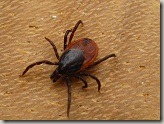
 Ticks are an often underestimated and poorly understood foe. In my travels I’ve found that the majority of family campers that I have met lack a good understanding about ticks and the dangers they bring with them.
Let’s take a look at why we should be worried about ticks, how to spot them, how to keep them at bay, and what to do if you get bitten by one.
Why are ticks so dangerous?
Quite simply, ticks are known to carry and transmit diseases that can be fatal to human beings. The best known disease that is transmitted by ticks is Lyme Disease. Lyme Disease is a bacterial infection that is transmitted by the bite of an infected deer tick. It’s a chronic debilitating condition that can cause musculo-skeletal, cardiac and central nervous system disorders. If detected early, treatment is relatively easy and effective.
Lyme disease is just one of many diseases that ticks can carry. A few other well know health conditions transmitted by ticks are Human Granulocytic Ehrlichiosis, Babesiosis, Rocky Mountain Spotted fever, and tularemia.
Ticks also pose a significant risk to pets, so don’t forget about your your family dog when you’re camped at the site.
How do I spot a tick?
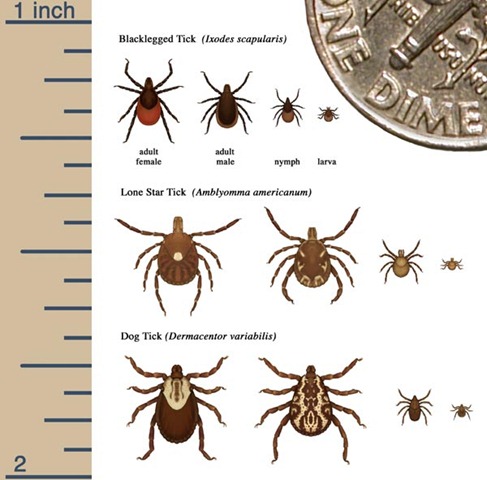
It’s important to note that different species of ticks live in different areas. A tick that you spotted in one location may look very different from a tick you spot when you are camping in a different location.
Whenever you or your children partake in outdoor activities, you should complete a visual inspection for ticks. It’s best to do this before returning indoors (i.e. tent, trailer, motorhome, or cabin).
The most common places to find ticks are:
Clothes
- on exposed clothing
- under collars and cuffs
Body
- around the scalp
- nape of the neck
- behind the ears
- behind the knees
- under armpits
- any exposed skin
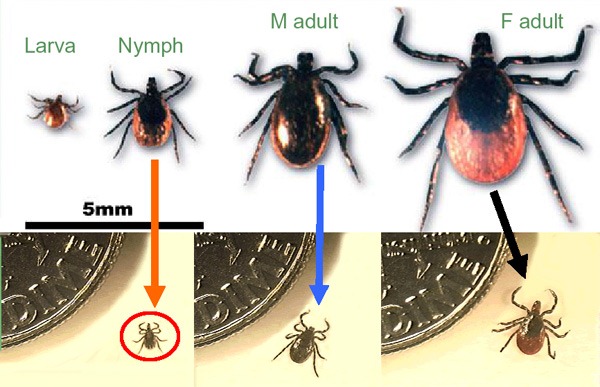
Here are some pictures to help you determine if you’ve found a tick. Deer ticks are the most common, so the first picture shows different stages of the deer tick lifecycle. The picture on the right will help you identify some of the other species.
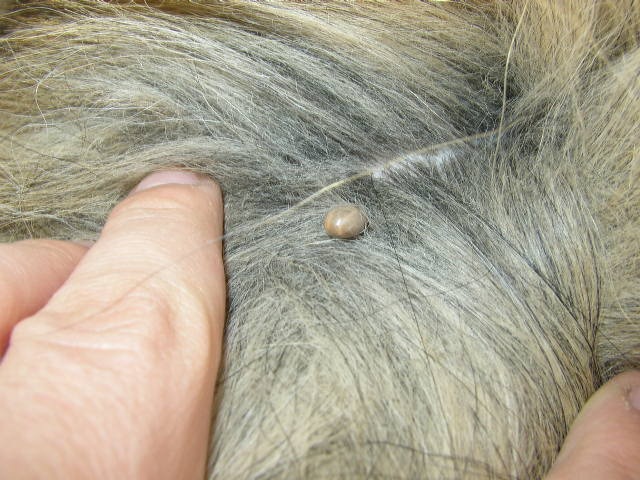
Be sure to check pets carefully, as ticks can hide very easily in pet hair.
What can I do to be prepared?
The best preparation in dealing with ticks is to limit your exposure. Take special care when entering heavy woods, long grasses, or areas with standing water as ticks thrive in these areas.
If you are planning to enter the woods or the fields between April and October, be sure to dress in a way the will best protect you and your kids from the ticks. Wear loose fitting clothes and tuck your long pants into your socks.
Ticks will travel up your body until they hit a roadblock. Wearing long sleeve shirts with collars and cuffs will help stop their travels. Make sure your shirt is tucked into your pants. Light colored clothing will make spotting ticks a lot easier then dark colors.
Use insect repellents that are designed to keep ticks away whenever possible. As with any sprays, make sure to read the directions and use appropriately. Keep poisonous sprays out of reach of children.
What do I do if I find a tick?
Removing and disposing of ticks is essential to ensuring your safety. Care should be taken to remove a tick properly, so that an infection can be avoided.
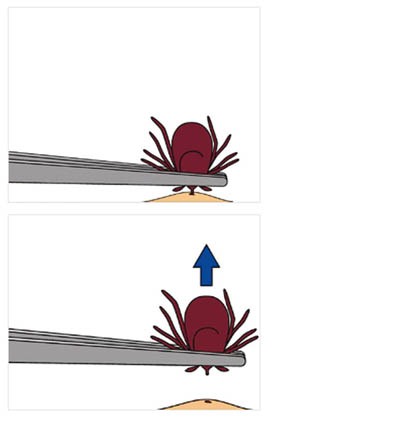 Rule number one is simply – don’t waste time. The sooner you get a tick off of you or your child, the better.
The most common way to remove a tick is to grasp it with a pair of tweezers as close to the skin as possible and slowly pull it away. You could also use any number of tick removal products available on the market. (see below)
Once removed, destroy the tick and dispose of it in a waste receptacle or toilet. Do not toss it into the grass. If it were to survive, it could colonize the area and further increase the health risks.
If the tick did bite, treat the area with a topical anti-biotic. For the following few weeks, watch for any rashes or flu like symptoms to develop. If they do, consult a physician as soon as possible.
Do not remove ticks with commonly used methods such as Vaseline, matches, or cigarettes. These methods will increase the chance of the tick injecting bacteria into the skin of the person it has bitten.
Do you have any advice with regards to ticks? Let us know in the comments.
You must log in to post a comment.